- ROSES MILLÉNAIRES -
Acrylique, sable et vernis sur bois
Dim. 01 : 150x250 cm
Dim. 02 : 70x50 cm
Dim. 03 : 150x150 cm
Quartier des Pyramides
Evry-Courcouronne (91)
Île-de-France (Fr)
Evry-Courcouronne (91)
Île-de-France (Fr)
Commande en collaboration avec l'association La Constellation pour le compte du bailleur Les Résidences-Yvelines Essonne.
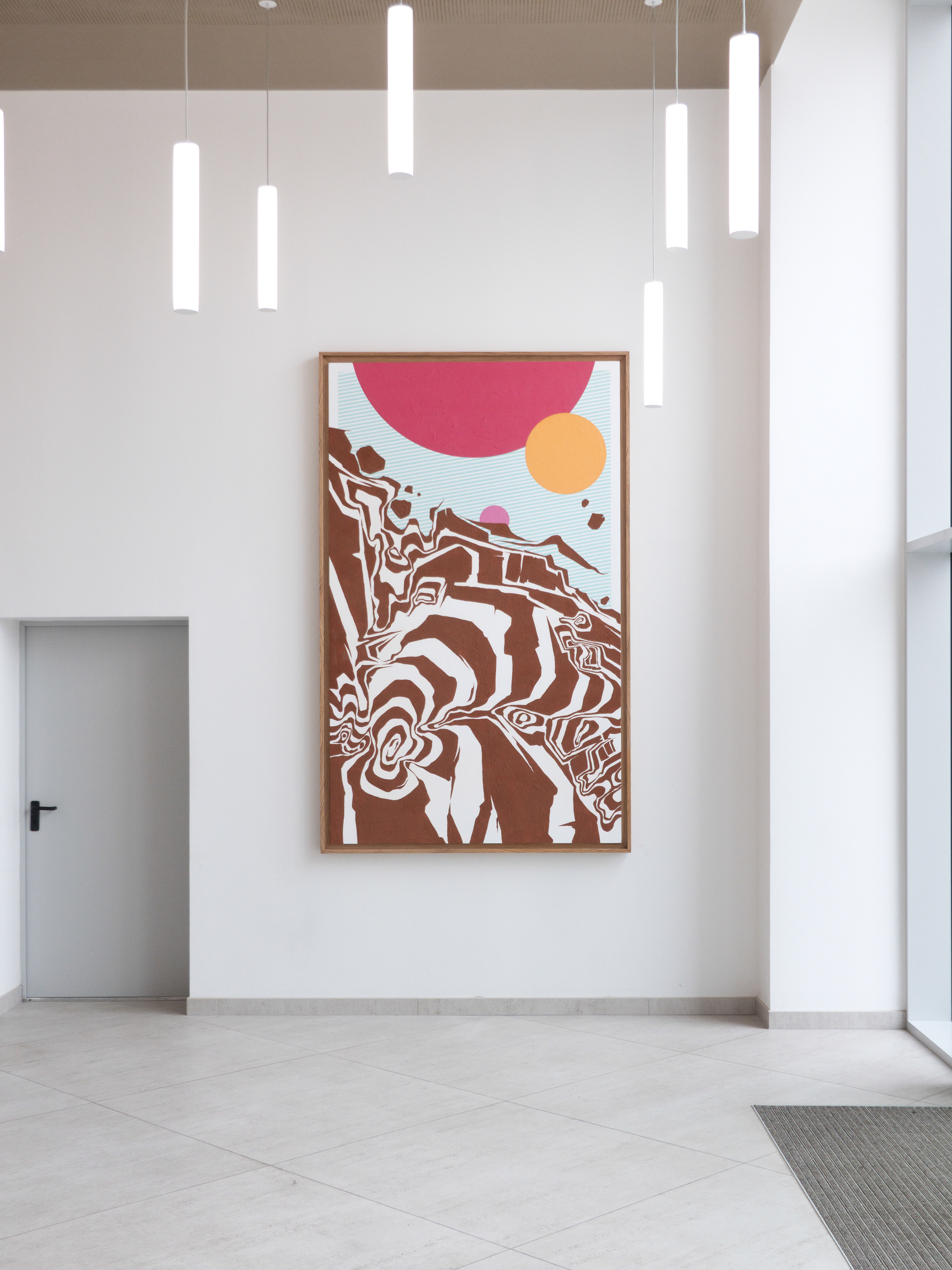
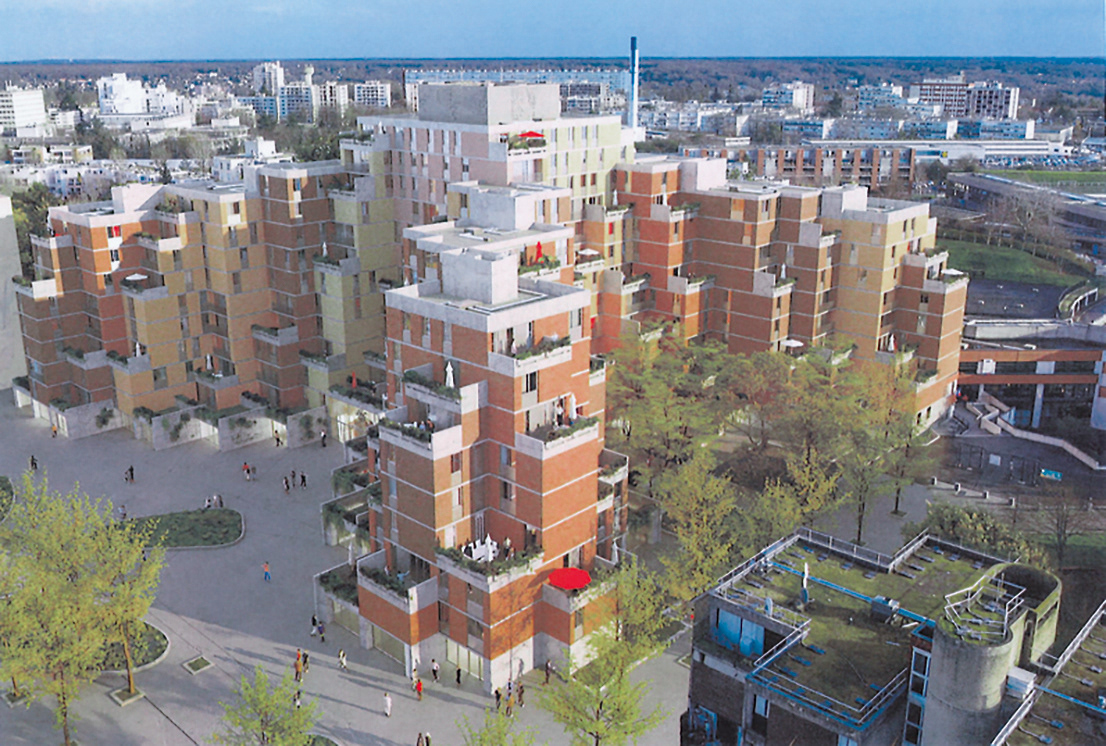
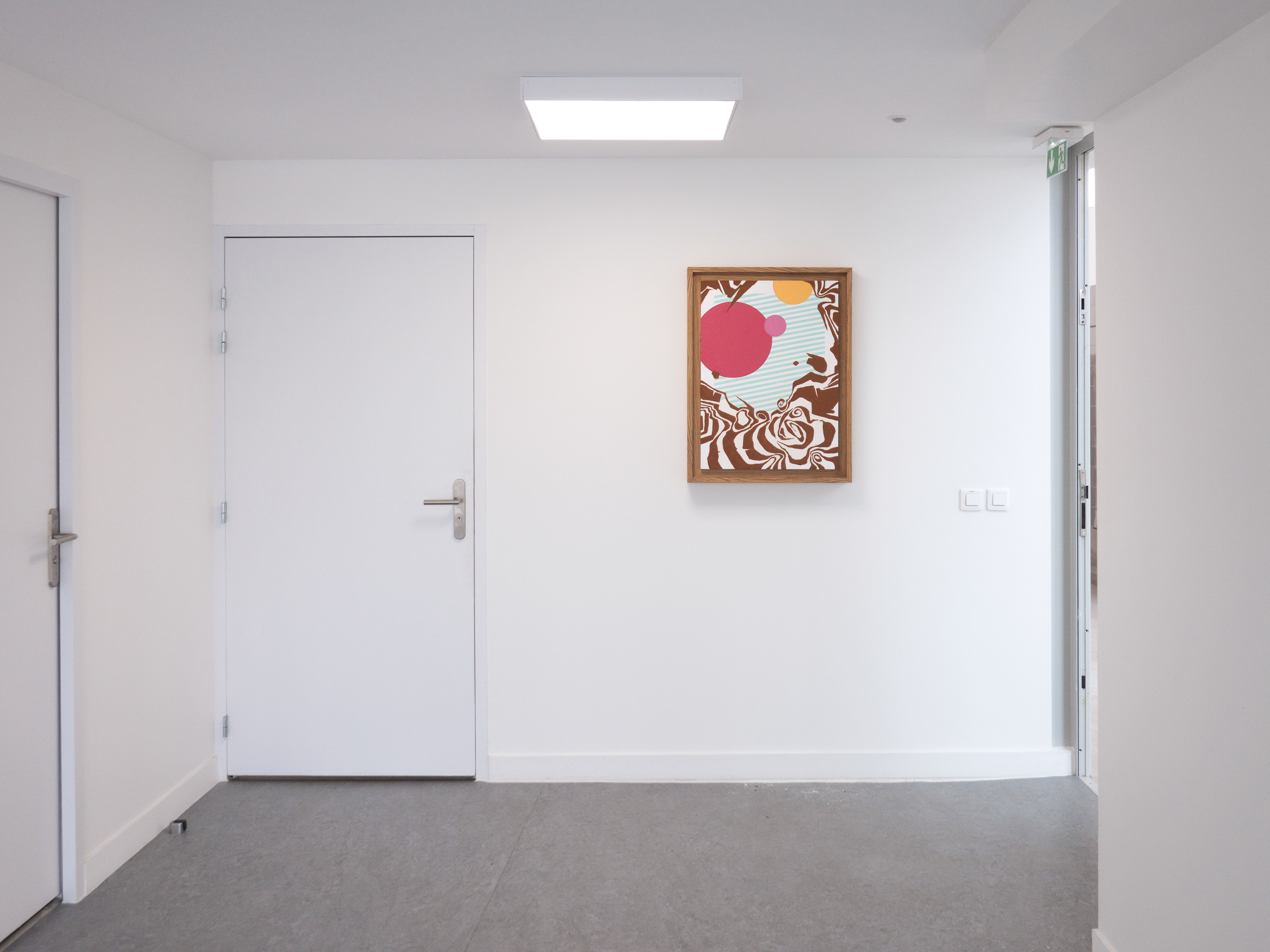
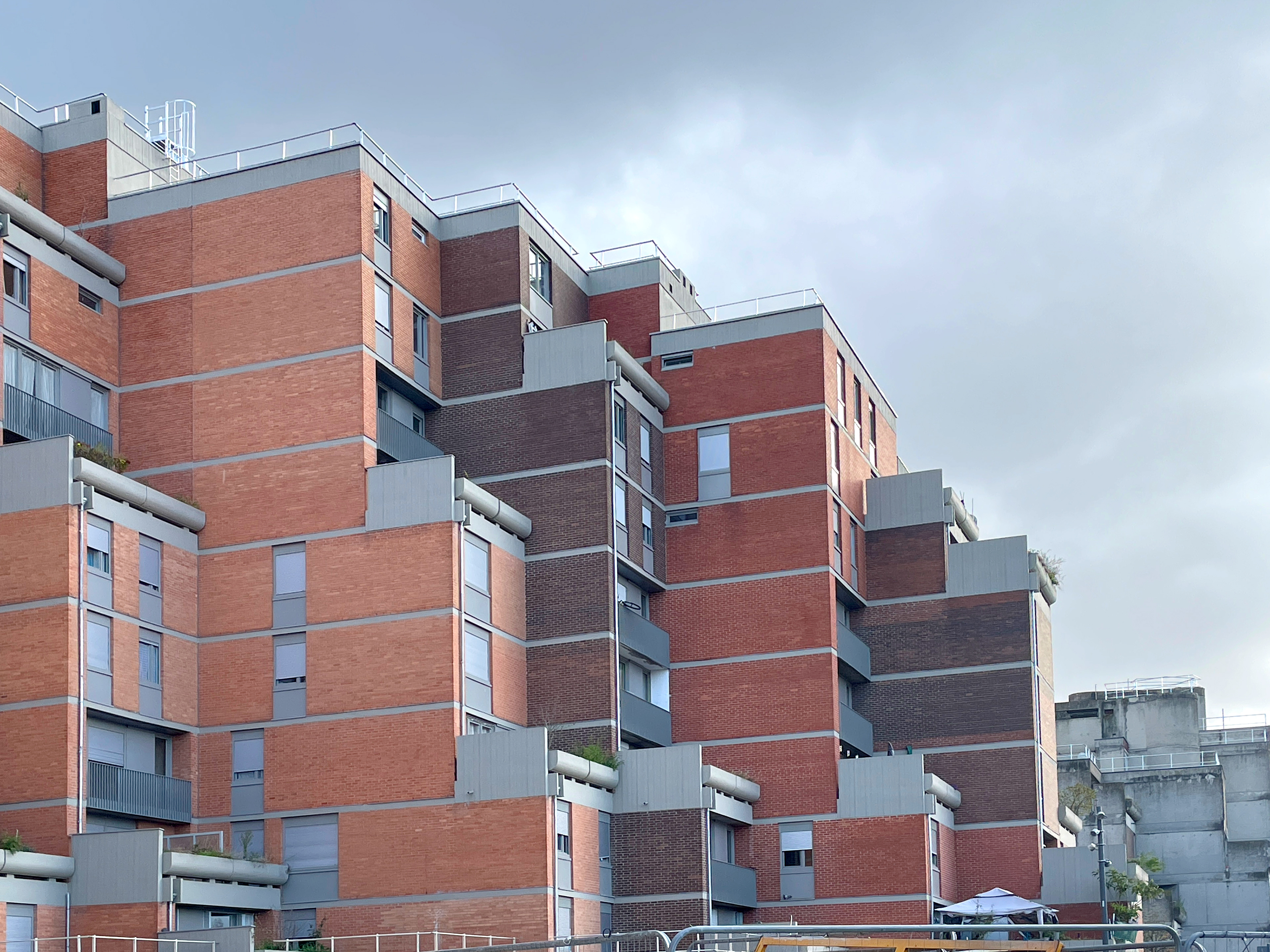
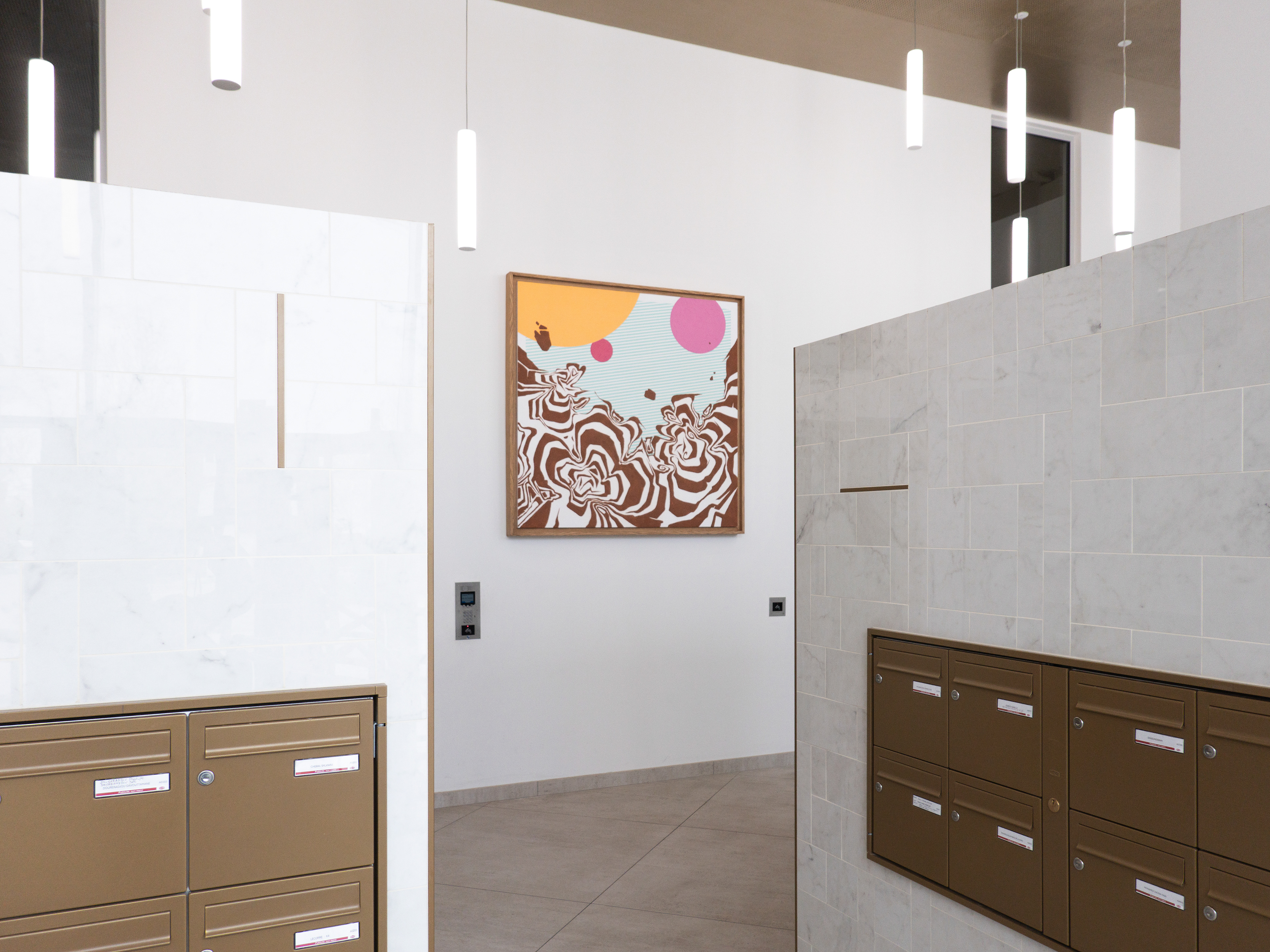
Cette série de trois peintures aux différentes dimensions est exposée dans le hall principal de la Pyramide 14, bâtiment emblématique du quartier des Pyramides à Evry-Courcouronnes (91). Édifié dans les années 1970 par le cabinet ANPAR et labellisé Architecture Contemporaine Remarquable (ACR) en 2008, cet ensemble architectural incarne le principe du gradin-jardin, caractéristique d’une période où l’urbanisme cherchait à concilier modernité et présence végétale.
La recherche plastique qui sous-tend ce projet s’appuie sur une étude menée à partir d’archives et de reportages retraçant l’histoire du site avant l’édification du quartier. Le terrain sur lequel s’élèvent aujourd’hui ces bâtiments appartenait autrefois à la société Georges Delbard, pépiniéristes et rosiéristes depuis 1935, qui y exploitait près de cinq hectares, dont une partie était consacrée à la culture de rosiers. Selon un reportage radiophonique "Les Pyramides d’Evry", diffusé sur France Culture en 2012, certaines de ces plantations auraient résisté aux profondes transformations du territoire, notamment une variété nommée "Centenaires de Lourdes".
Cette survivance végétale — discrète, presque invisible — constitue le point de départ du projet. Elle agit comme un indice révélant la continuité souterraine entre un passé horticole aujourd’hui disparu et l’espace urbain. De ce croisement entre mémoire du vivant et histoire architecturale naît un parallèle entre le bâtiment, dont la structure évoque symboliquement les pyramides d’Égypte, et la rose comme forme naturelle : celui de la Rose des Sables. Formation minérale évaporitique que l’on trouve dans les zones désertiques, cette roche se développe par cristallisation lenticulaire de minéraux, dessinant une structure qui rappelle les pétales d’une fleur façonnée sur des millions d’années.
L’une étant issue de la culture et du soin humain, l’autre d’un lent processus géologique ; toutes deux incarnent le passage du temps et la transformation de la matière. Leur mise en regard ouvre un espace de réflexion où le biologique et le minéral se répondent, brouillant les frontières entre nature et construction. À travers cette mise en perspective, la série cherche à révéler une dimension méconnue du patrimoine d’Evry et propose une relecture sensible du territoire dans laquelle la trace du vivant dialogue avec la monumentalité du bâti. Il s’agit d’une réflexion sur la persistance de la vie dans un environnement façonné par l’homme, où la rose devient une métaphore de mémoire et de résistance.
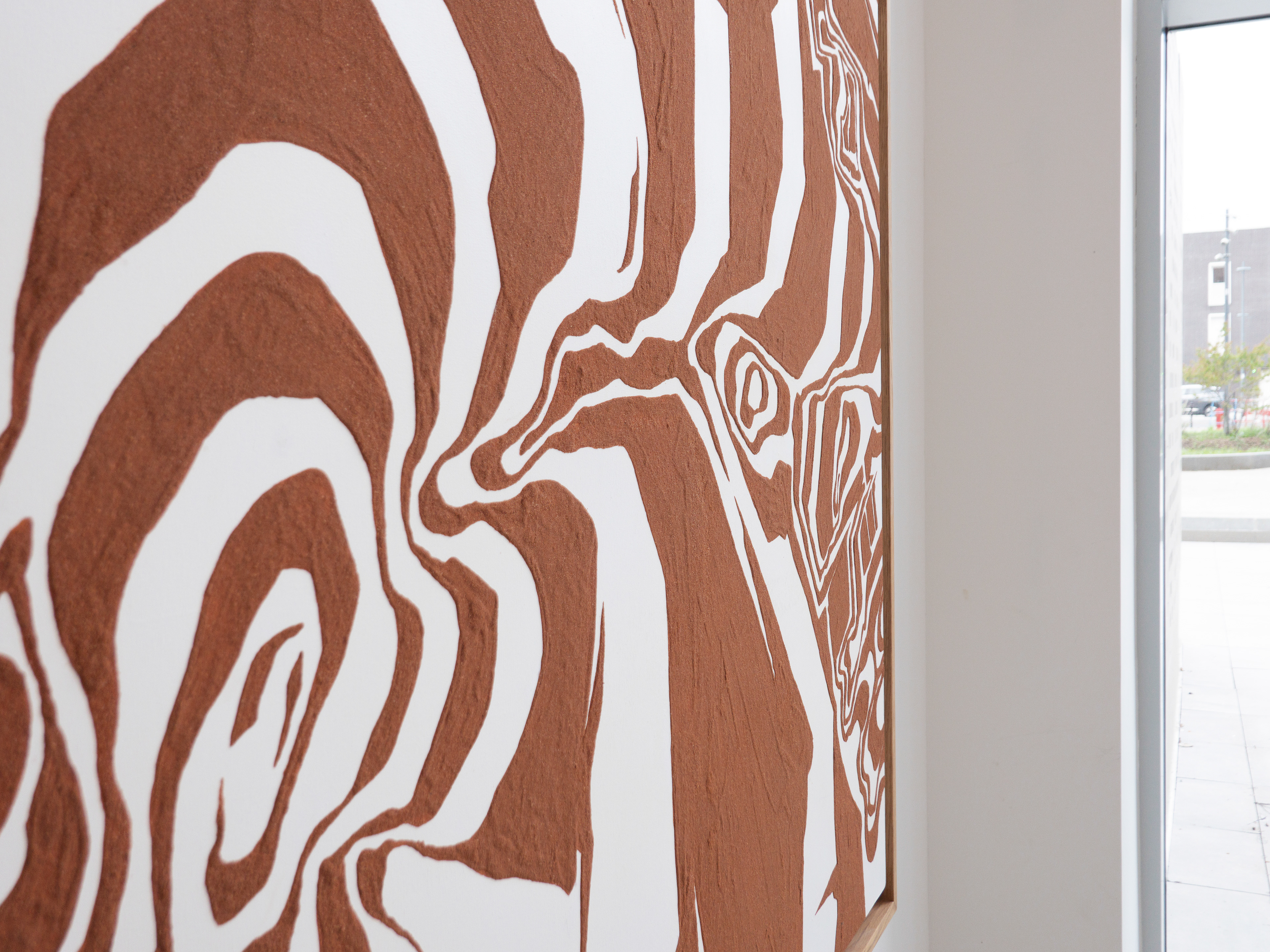
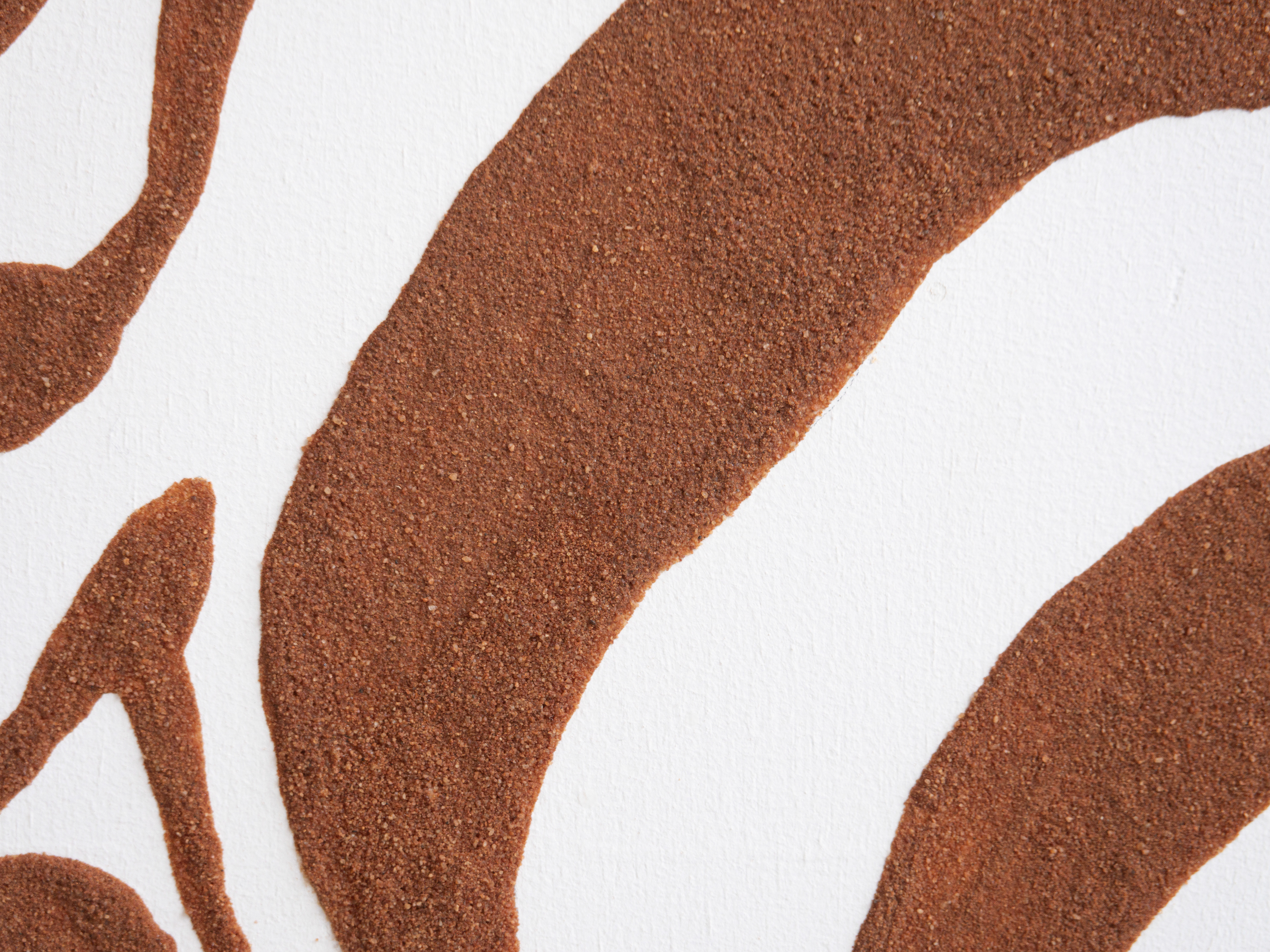
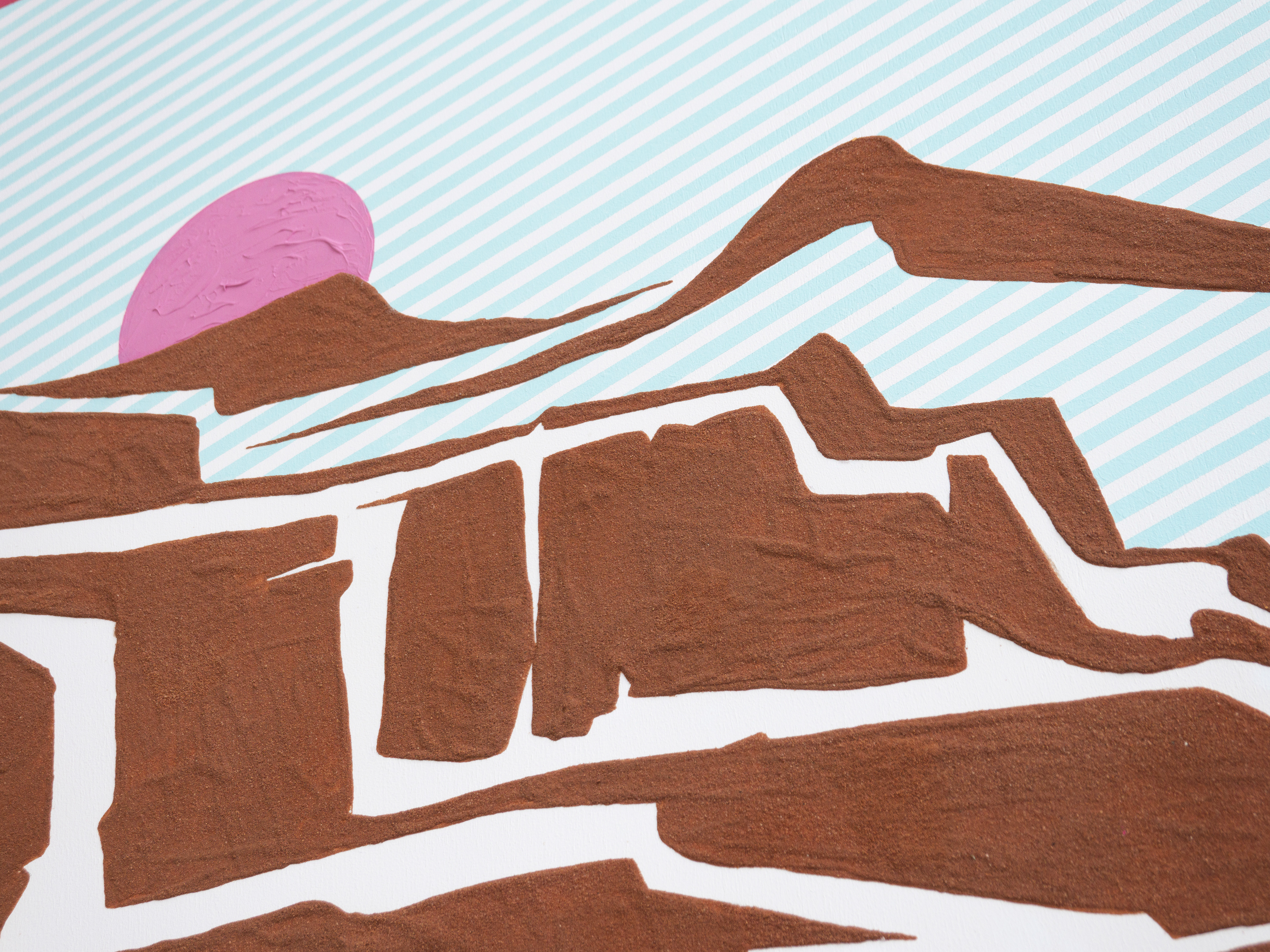
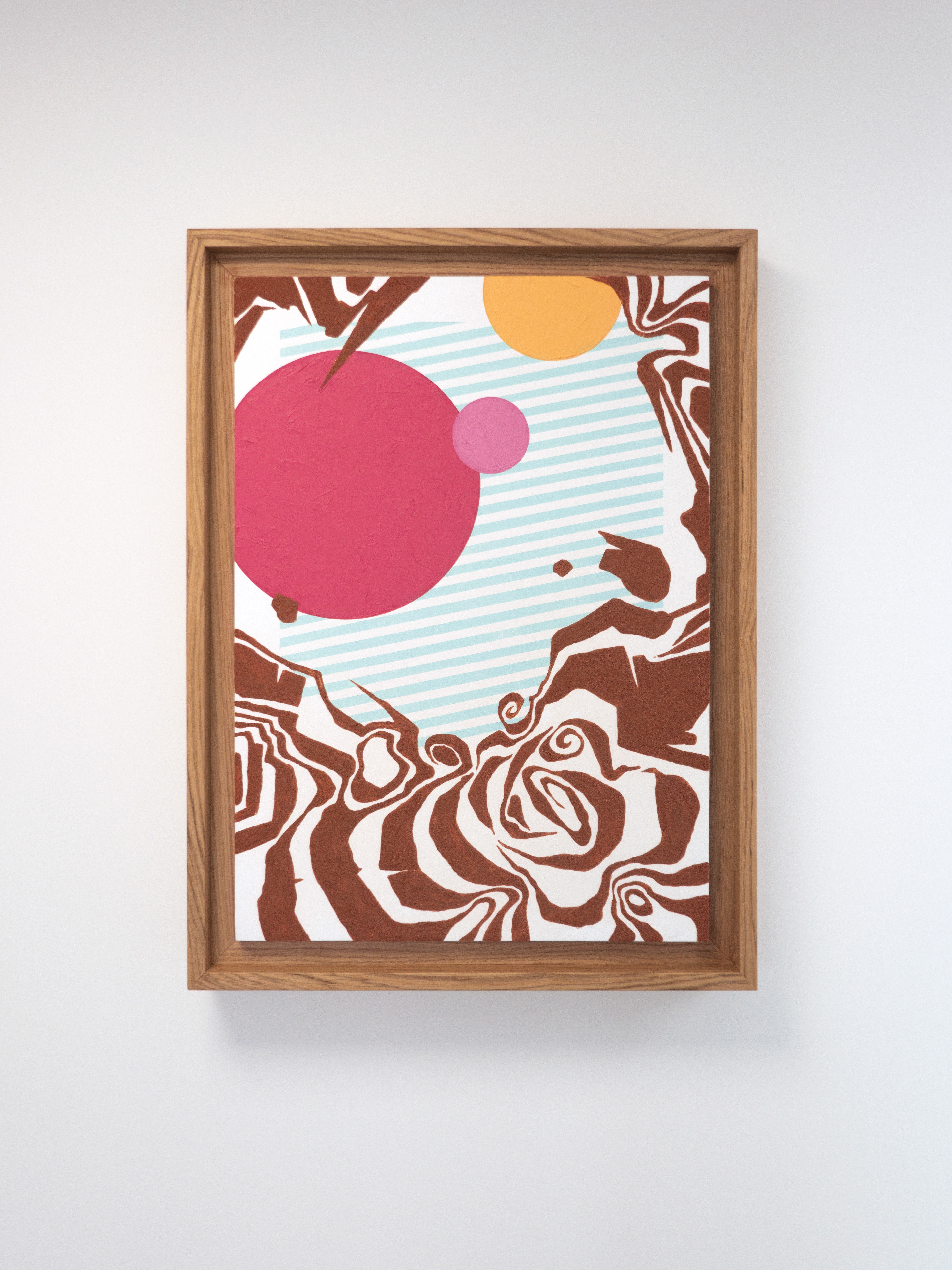
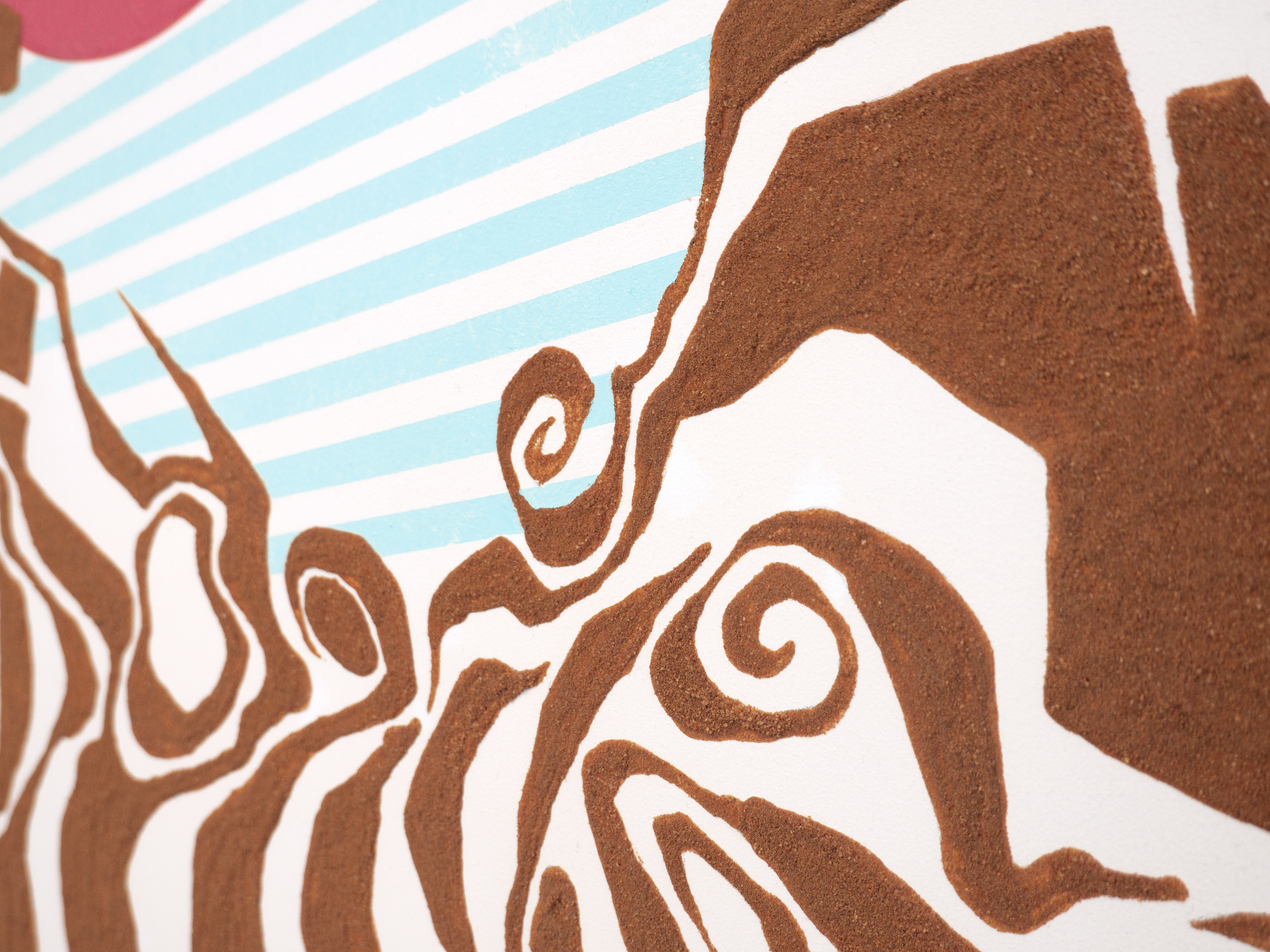
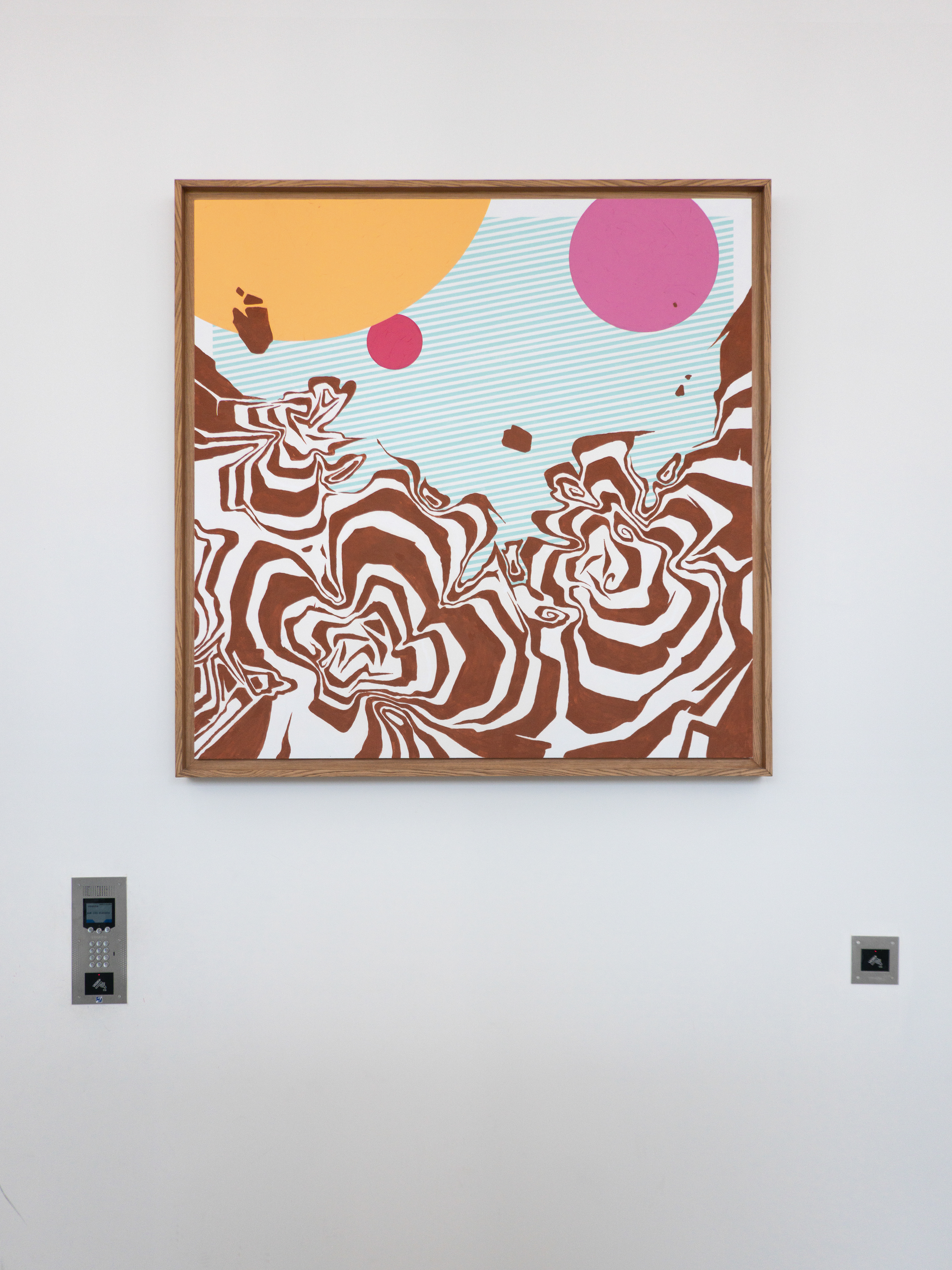
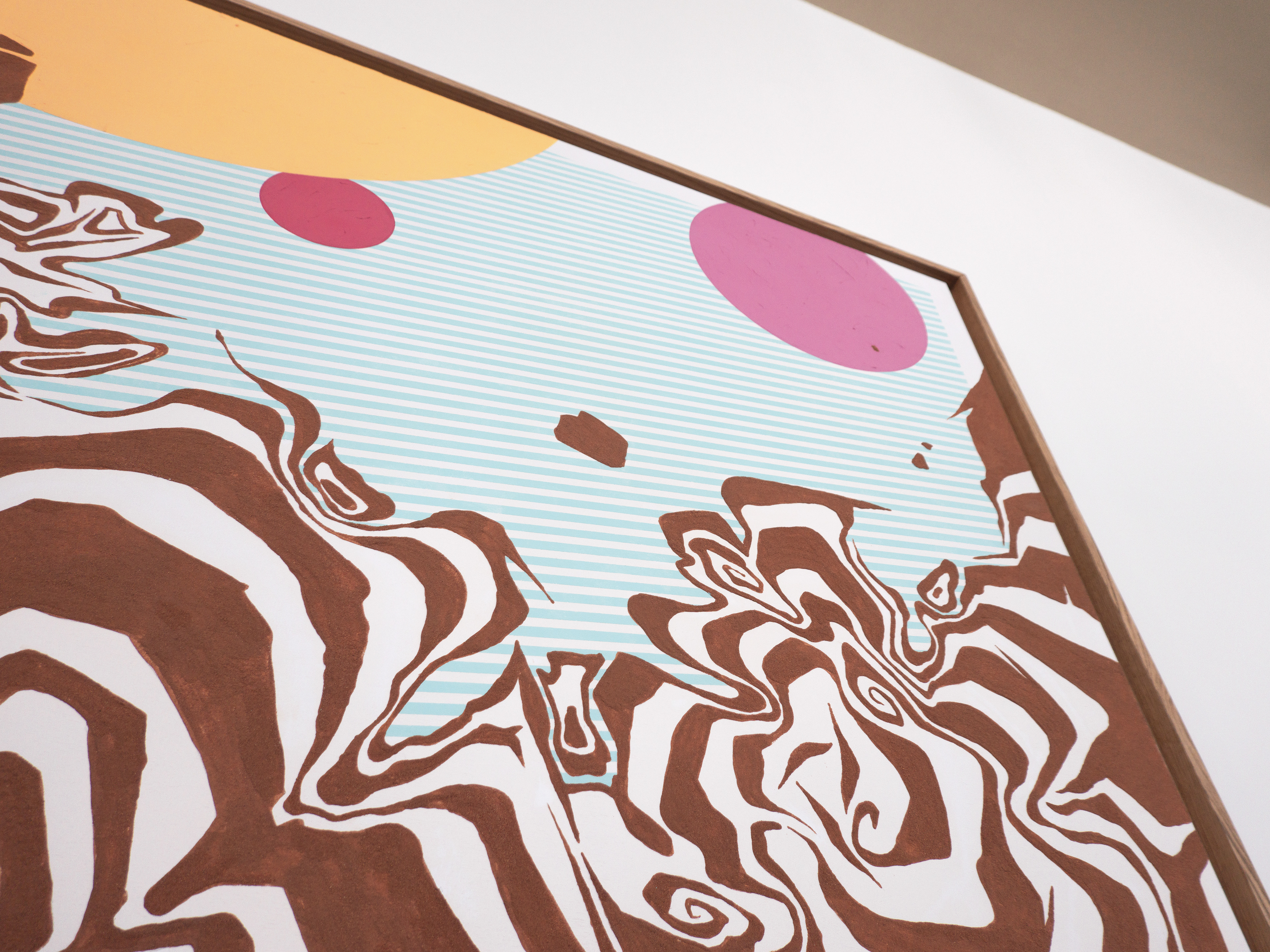
Les "Roses Millénaires" se présentent comme une série de peintures où la surface picturale devient le lieu d’une expansion progressive de la forme. Les compositions s’organisent autour d’une explosion de pétales qui envahit l’ensemble du tableau. À mesure qu’elles s’éloignent du cœur de la fleur, ces formes se dilatent, jusqu’à se fondre dans une ligne d’horizon évoquant les ondulations des dunes. Les pétales, réalisés à partir d’un mélange de sable et de vernis, confèrent à la surface une matière dense et organique, dont la texture rappelle celle des Roses des Sables. La partie supérieure du tableau s’ouvre sur un ciel structuré par des lignes diagonales d’un bleu turquoise/azur parsemé de planètes imaginaires, suggérant une proximité symbolique avec un littoral lointain.
- MILLENNIAL ROSES -
Acrylic, sand and varnish on wood
Dim. 01: 150 × 250 cm
Dim. 02: 70 × 50 cm
Dim. 03: 150 × 150 cm
Dim. 01: 150 × 250 cm
Dim. 02: 70 × 50 cm
Dim. 03: 150 × 150 cm
Pyramides District
Évry-Courcouronnes (91)
Île-de-France (France)
Évry-Courcouronnes (91)
Île-de-France (France)
Commission in collaboration with the association La Constellation on behalf of the housing provider Les Résidences-Yvelines Essonne.
This series of three paintings of varying dimensions is displayed in the main hall of Pyramide 14, an emblematic building in the Pyramides district of Évry-Courcouronnes (91). Built in the 1970s by the ANPAR architectural firm and awarded the “Remarkable Contemporary Architecture” (ACR) label in 2008, this architectural complex embodies the terraced garden principle, characteristic of a period when urban planning sought to reconcile modernity with the presence of vegetation.
The artistic research underpinning this project is based on a study conducted using archives and reports retracing the history of the site prior to the construction of the district. The land on which these buildings now stand once belonged to the company Georges Delbard, nurserymen and rose growers since 1935, who cultivated nearly five hectares there, part of which was dedicated to growing rose bushes. According to a radio documentary, “Les Pyramides d’Évry”, broadcast on France Culture in 2012, some of these plantations are said to have survived the profound transformations of the area, notably a variety known as “Centenaires de Lourdes.”
This vegetal persistence — discreet, almost invisible — forms the starting point of the project. It acts as a clue revealing an underlying continuity between a now-vanished horticultural past and the urban space. From this intersection between living memory and architectural history emerges a parallel between the building, whose structure symbolically evokes the pyramids of Egypt, and the rose as a natural form: that of the Desert Rose. An evaporitic mineral formation found in desert regions, this rock develops through lenticular crystallization of minerals, forming structures that resemble the petals of a flower shaped over millions of years.
One originates from human cultivation and care, the other from a slow geological process; both embody the passage of time and the transformation of matter. Their juxtaposition opens up a space for reflection in which the biological and the mineral respond to one another, blurring the boundaries between nature and construction. Through this perspective, the series seeks to reveal a little-known dimension of Évry’s heritage and offers a sensitive reinterpretation of the territory, in which traces of living matter engage in dialogue with the monumentality of the built environment. It is a reflection on the persistence of life within a man-made environment, where the rose becomes a metaphor for memory and resilience.
“Millennial Roses” presents itself as a series of paintings in which the pictorial surface becomes the site of a progressive expansion of form. The compositions are structured around an explosion of petals that spreads across the entire canvas. As they move away from the heart of the flower, these forms expand until they dissolve into a horizon line evoking the undulations of dunes. The petals, created using a mixture of sand and varnish, give the surface a dense, organic materiality, whose texture recalls that of Desert Roses. The upper part of the painting opens onto a sky structured by diagonal lines of turquoise/azure blue, scattered with imaginary planets, suggesting a symbolic proximity to a distant shoreline.